

Most jewelry collections sit idle because pieces don’t fit smoothly into daily life. Some pieces get set aside because they snag on fabric, feel awkward to put on, or simply don’t match a person’s routine. Building a small daily rotation is less about following one formula and more about choosing pieces that suit your own habits and preferences.
A practical starting point is to think about how a piece behaves when it’s actually being worn — how it sits, how it moves, and how easy it is to put on and take off — rather than judging it on appearance alone. Personal preference plays a large role here: what feels right for one person’s routine may not suit another’s.
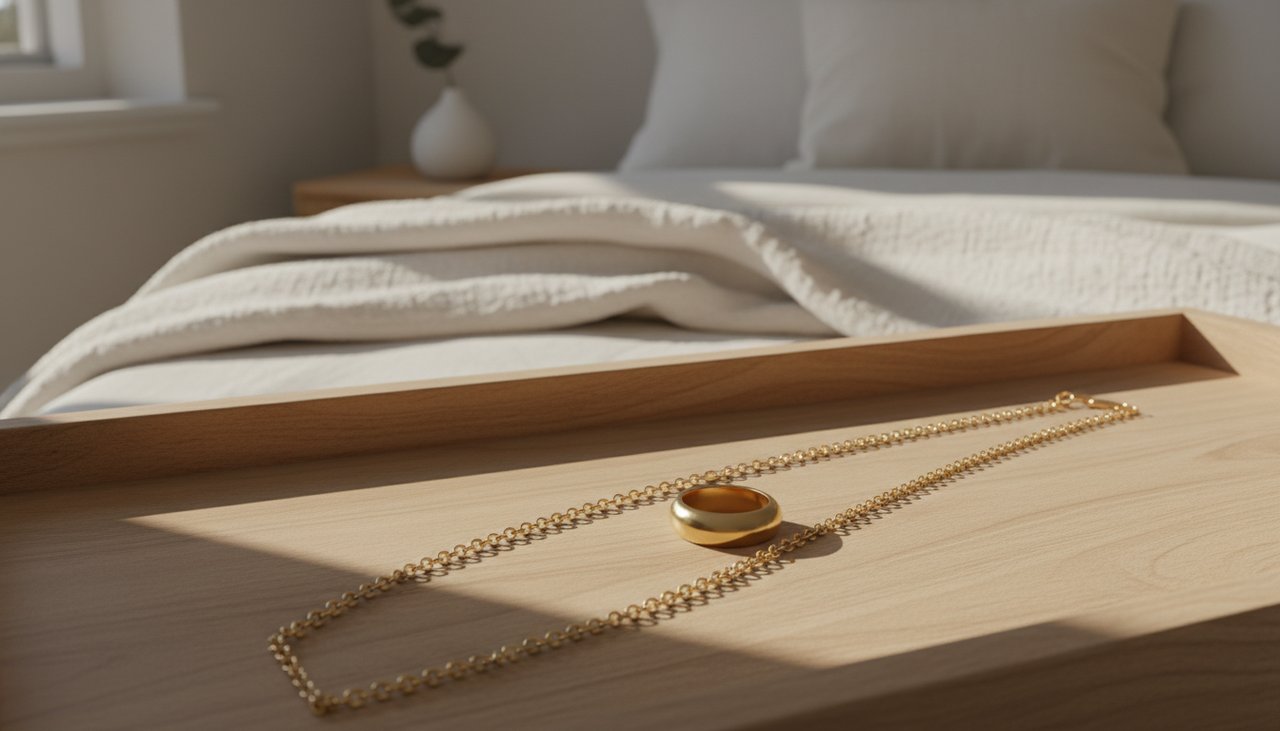
A capsule built around three pieces gives each item a clear role. Preferences vary, but many people find it helpful to think about each piece in terms of a few practical considerations:
- Necklace: chain dimensions, metal type, and how the chain hangs.
- Earrings: back style and profile, such as flat-back labret or a close-fitting mini hoop.
- Ring: overall profile and how flush it sits against the finger.
Foundational Necklace
Chain dimensions are one visual detail to compare with a necklace you already own. Some people prefer a thinner chain for a subtler look, while others choose a thicker profile for a bolder presence; the choice is mainly a matter of personal taste and the stated construction.
Metal choice is another personal decision. A plated finish, solid metal, and different alloys can have different stated compositions and care guidance. If you are mindful of rings green finger marks or irritation, check the specific product information rather than assuming a material label will determine your reaction.
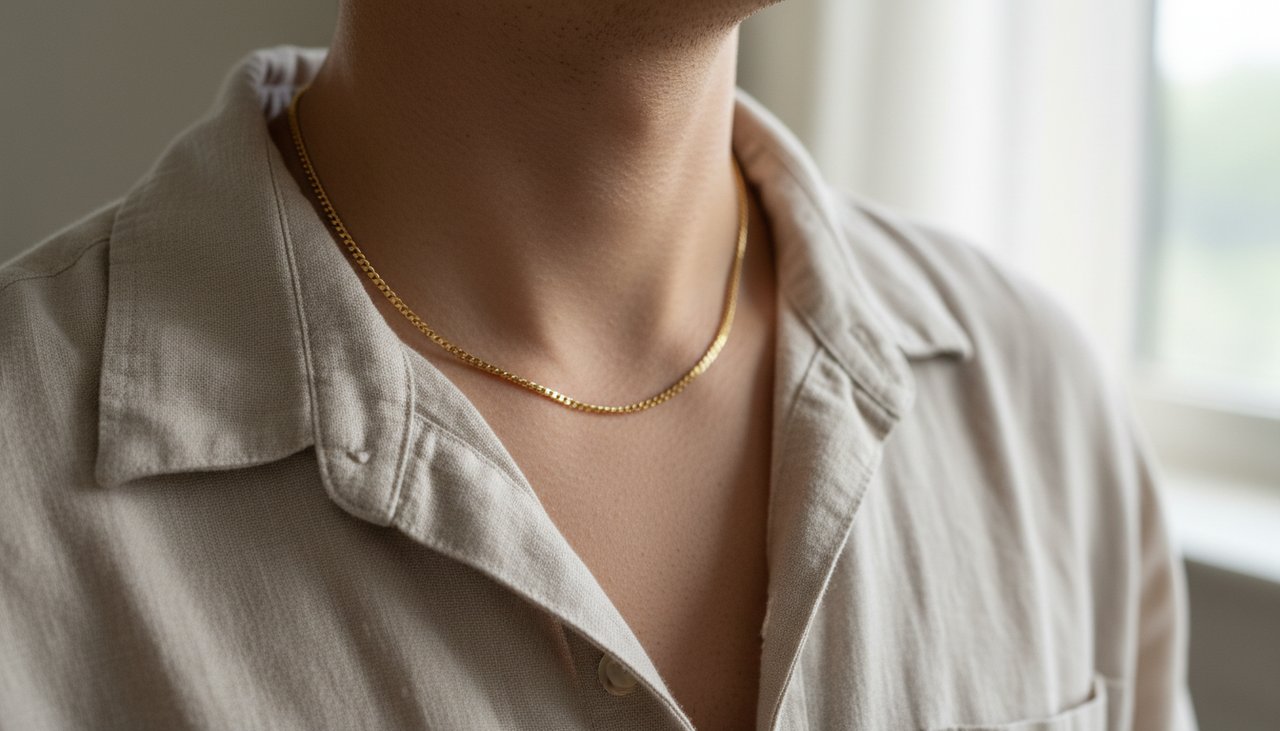
Chain construction is worth considering alongside metal choice. Box chains have a dense, square, interlocking link structure, while cable chains use a simpler oval link and are a common style that most jewelers are familiar with when it comes to repairs. Neither is inherently the “right” choice — it depends on the look you want.
If you want to get a feel for how a chain will hang, try a simple dangle test: hold the necklace by its clasp and let it hang freely. If it twists or spirals rather than hanging straight, that’s simply a characteristic of that particular chain’s construction, and you can decide whether it suits your preference.
Earrings for Everyday Wear
When choosing earrings meant to be worn often, many people pay close attention to the back style and overall profile, since these affect how the earring sits against the ear. Low-profile studs and close-fitting mini-hoops are popular choices, in part because their compact shape is less likely to catch on clothing or hair during everyday movements.
Traditional butterfly backs are one option among several, with an exposed post at the back of the earring. Some people prefer this style, while others prefer designs where the back sits closer to the ear, which is a matter of personal preference rather than a fixed rule.
Flat-back labrets are a style that originated in professional piercing and have become popular for everyday wear more broadly. They use a smooth, flat disk at the back that sits close to the skin, which some people find preferable in terms of styling for a cleaner look, though this will come down to individual taste.
If you’re browsing for this style, a few features to look for:
- Threadless or push-pin backs, which are a common mechanism for this style.
- A smooth, low-profile back that sits close to the ear.
- Metal types that suit your own preferences and any considerations you may want to research for your specific situation.
Anchor Ring
A ring with a flush, simple profile is a common anchor piece for a daily capsule, generally without raised stones or sharp edges that might interfere with everyday tasks like typing. Getting the sizing right matters for how a ring feels day to day, and it’s worth taking the time to find ring size that fits your finger well, accounting for slight natural changes in size throughout the day.
Ring shape is largely a styling decision. A rounded dome profile is one popular option, while a flatter signet or wide bar ring is another — both are common choices, and which one you prefer will depend on your taste and the rest of your jewelry. Some people like to build a small capsule around one main piece and two subtler accents for a balanced look on the hand, though this is just one styling approach among many.

Choosing an anchor ring often comes down to finding a shape and fit that feels right for your own hands and habits.
Some people like to close their hand into a fist to get a sense of how a ring’s profile feels against the palm and neighboring fingers before deciding whether the width and shape suit them — this is simply one way to gauge a ring’s profile, and preferences here will vary from person to person.
Keeping Them Clean
For pieces worn often, check the maker’s care instructions before choosing a cleaning method. The appropriate approach depends on the metal, plating, stones, and construction. For a cautious overview of how to clean jewelry at home, start with the material and finish rather than applying one method to every piece.
Building a three-piece capsule is ultimately about narrowing down a lot of options into a small set of pieces that fit your own routine and taste. There’s no single combination that works for everyone — the right necklace, earring style, and ring will look different depending on what you value and how you like to dress day to day.
Thinking in terms of a necklace, a pair of earrings, and a ring is simply one way to organize that decision, not a strict formula to follow.