

A bracelet stack looks intentional when the pieces have different jobs. Choose one anchor, add one quieter companion, and stop long enough to see how they move together. There is no useful universal ratio, forearm percentage, or required number of bracelets.
The practical limit is set by the pieces and your day: their width, length, closures, surface detail, and whether they keep crossing, catching, or striking a desk or watch.
Build the stack around one clear anchor
Start with the piece you most want to notice. It might be a wider bangle, a chain with a distinctive clasp, a textured bracelet, or the watch you already wear. The next piece should support that choice rather than repeat every feature at the same intensity.
| If the anchor is… | Try adding… | Check before adding more |
|---|---|---|
| A smooth rigid bangle | A fine flexible chain | Whether the chain repeatedly slides under or across it |
| A textured or patterned bracelet | A plain polished link | Whether two detailed surfaces compete at the same scale |
| A watch | One narrow bracelet, or bracelets on the other wrist | Whether metal parts repeatedly contact the case, crown, or clasp |
| A double-layer or wider design | No second piece at first | Whether the single bracelet already provides the visual width you wanted |
Contrast does not require mixed metals or strong color. A polished box chain beside a fine twisted chain already changes link scale and reflection. Our bracelet chain guide explains those structural differences without turning them into fixed styling rules.
Control movement before increasing the count
Two bracelets can feel busier than four if their lengths make them occupy the same position. Read every product’s finished length or adjustment range, then compare it with your wrist measurement. The guide to measuring bracelet size separates wrist circumference from bracelet length, inner circumference, and bangle diameter.
For a first test, wear the two-piece stack for ordinary low-risk tasks and notice what actually happens:
- If one bracelet keeps disappearing beneath another, change the length relationship or remove one.
- If two clasps migrate to the same point, reverse one bracelet or try a different pairing.
- If a rigid edge repeatedly meets a watch or another polished surface, separate the pieces rather than assuming a soft spacer will solve every contact point.
- If a chain catches on a cuff or knit, check the clasp and exposed details before adding another layer.
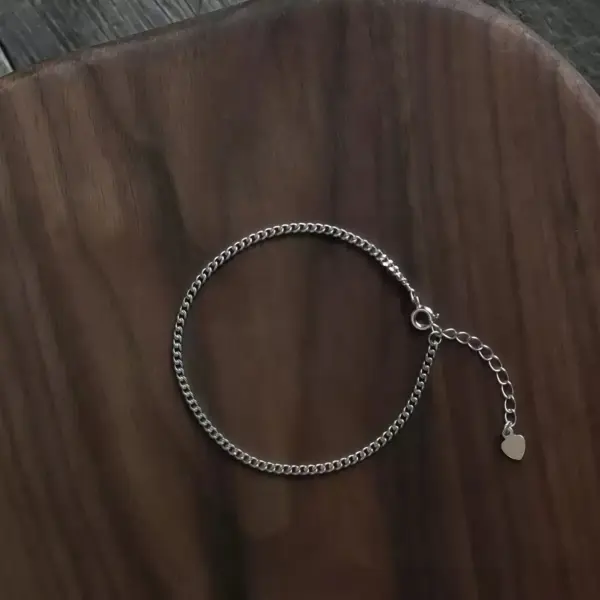
This fine-link bracelet comes in two adjustable length ranges. Read the selected range as product data, then compare it with your measured wrist rather than treating “adjustable” as one-size-fits-all.
Edit the stack for the setting
A stack that works while standing may behave differently at a keyboard, under a coat sleeve, or beside a watch. Test the arrangement where you plan to wear it, then decide whether its movement, sound, and contact suit that setting.
Use this short edit:
- Look: can you identify the anchor, or do all pieces demand equal attention?
- Move: do the bracelets cross or catch in a way that makes you keep rearranging them?
- Listen: is the amount of contact appropriate for a quiet room, desk work, or dining?
- Remove one: compare the simpler version before deciding that the fuller stack is better.
Mixing polished and textured surfaces—or even mixing metal colors—is a preference, not a formula. Repeat one element such as link scale, finish, or shape if you want cohesion, then let one other element change. The silver bracelets collection lists dimensions and adjustment details so you can compare actual pieces rather than build from an invented ratio.
Begin with two, learn how they share the wrist, and add a third only when it contributes something you can name. If you keep rearranging the result, remove one piece and test it again.