
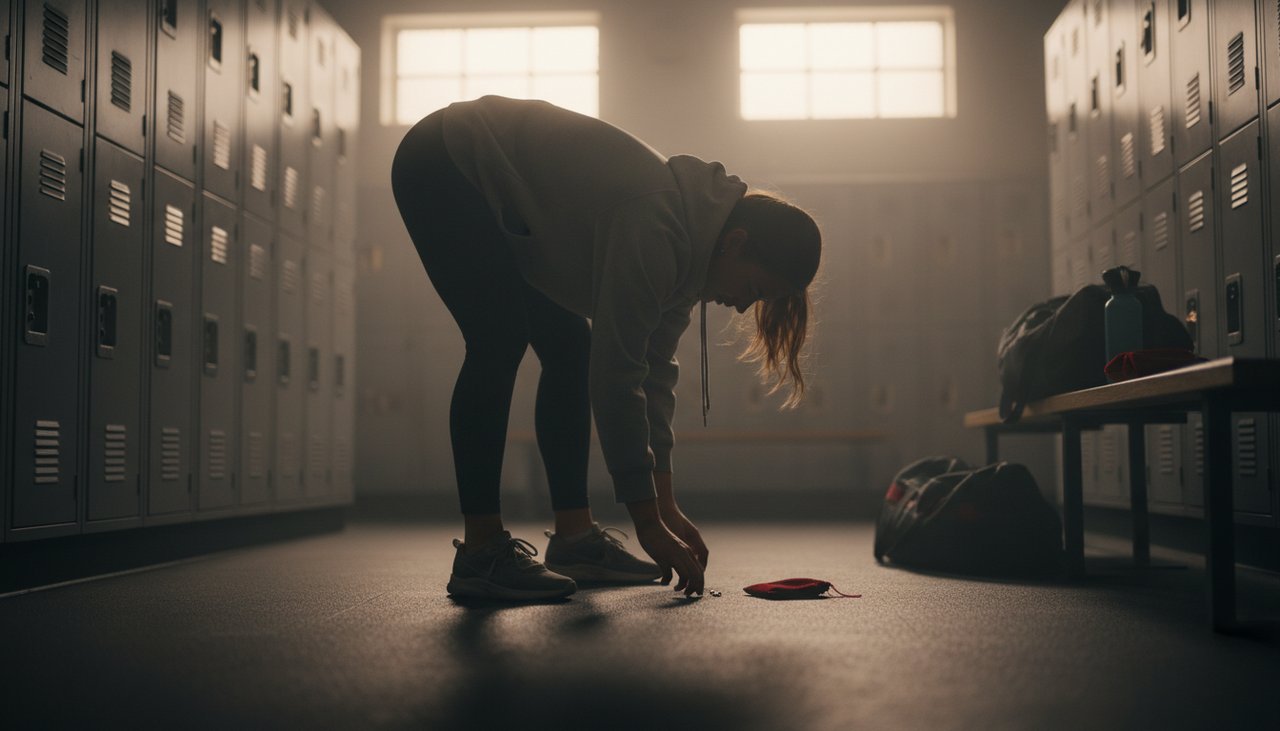
The ritual usually began at 6:45 AM in the dim light of the gym locker room. It was the sound of a locker door swinging on its hinges and the struggle of cold fingers against a microscopic metal clasp. Then, the inevitable: a sharp, metallic ping as an earring back hit the rubber floor. The next three minutes were spent on hands and knees, searching for a tiny speck of silver in the shadows. This was the daily friction of a life trying to balance movement with ornament.
Jewelry Graveyard
A velvet organizer once sat on a dresser, filled with what seemed like versatile choices. In reality, it was a collection of static objects. There was the layered necklace that left a dull green shadow—a common frustration similar to how some lower-quality rings green finger marks appear—across the collarbone after a single sweaty hour on a bike. Heavy hoops would rhythmically strike the jaw with every stride of a run. Even the rings became obstacles, pressing painfully into the skin the moment a palm closed around a dumbbell. These pieces were designed for a body at rest, but they became liabilities the moment the heart rate climbed.
Second Skin
The realization was simple: why spend so much time putting things on and taking them off? The focus shifted from making a statement to achieving weightlessness. The goal was to find items that felt like a natural extension of the body, where aesthetics took a backseat to the quiet necessity of durability.
The most reliable pieces in a wardrobe are the ones that demand absolutely nothing from you.
What Works
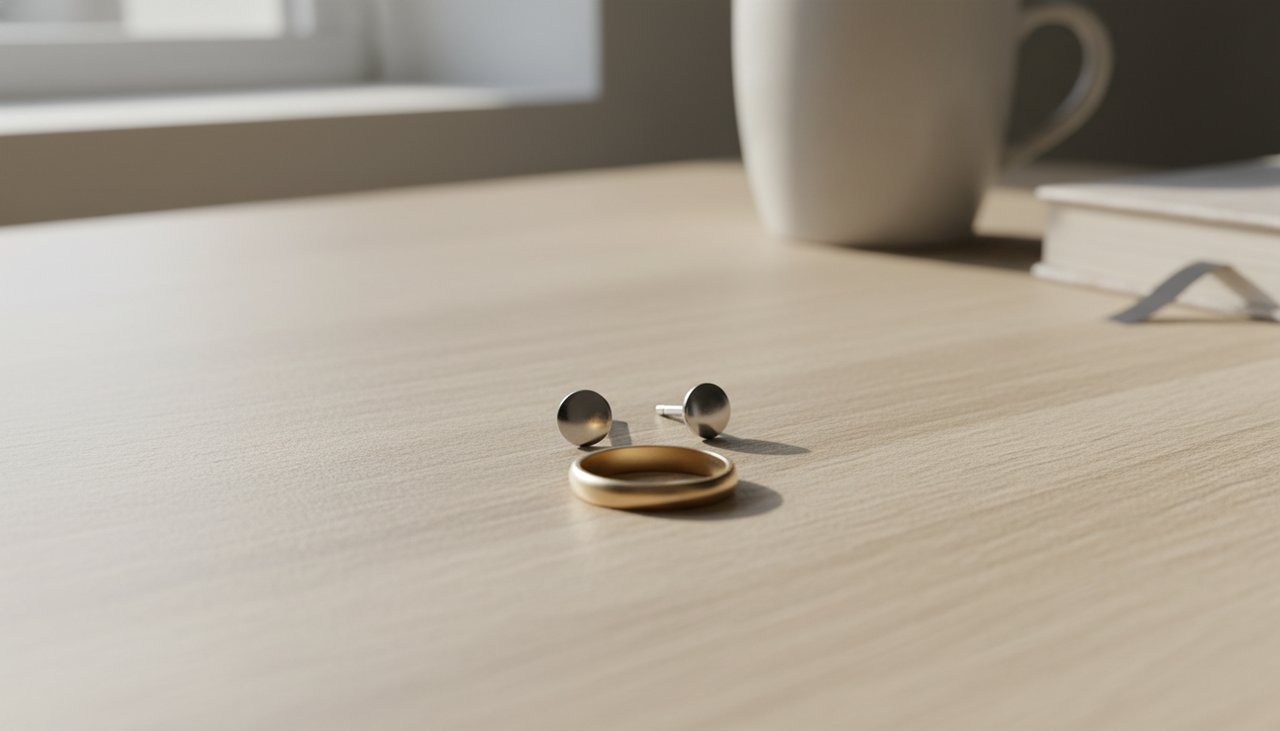
The collection was rebuilt with a hard focus on the chemistry of the materials. Brass and thin plating were cast aside in favor of titanium and solid gold. These metals are naturally hypoallergenic and don’t react with sweat during extended wear — no green marks, no skin irritation, no degradation after a post-workout shower. Because these materials maintain their integrity without the need for frequent silver jewelry cleaning routines, they are ideal for a set-it-and-forget-it lifestyle. The mental relief of never having to hesitate before jumping into water was worth the initial investment.
Titanium is worth distinguishing from “surgical steel,” which still appears frequently in jewelry marketed as safe for active wear. Most surgical steel alloys contain between one and twelve percent nickel — enough to trigger reactions in sensitive skin after prolonged contact with sweat. Implant-grade titanium (ASTM F136) contains no nickel at all. It is the material professional piercing studios switched to precisely because surgical steel was causing problems that went undiagnosed for months. For jewelry that never comes off, the difference matters.
The hardware changed too. Traditional butterfly backs were replaced by flat-back labrets. Suddenly, there was no metal post jabbing into the neck during a stretch or pressing against the skull while wearing tight headphones.
What is a flat-back labret? It is an earring where the back is a flat disc rather than a pointed butterfly clasp. The disc sits flush against the skin behind the earlobe, with no protruding post. The front piece attaches via a threadless push-pin mechanism — it holds through friction rather than a threaded screw, which means it stays secure without tightening and can be changed out without tools. Originally developed for body piercing, flat-back labrets are now the standard recommendation for anyone who needs earrings to stay in place through sleep, exercise, and daily movement.
The new criteria for any piece entering the daily routine became remarkably specific:
- Tiny studs that sit perfectly flush against the earlobe.
- Huggie hoops that measure under 20mm in diameter to avoid catching.
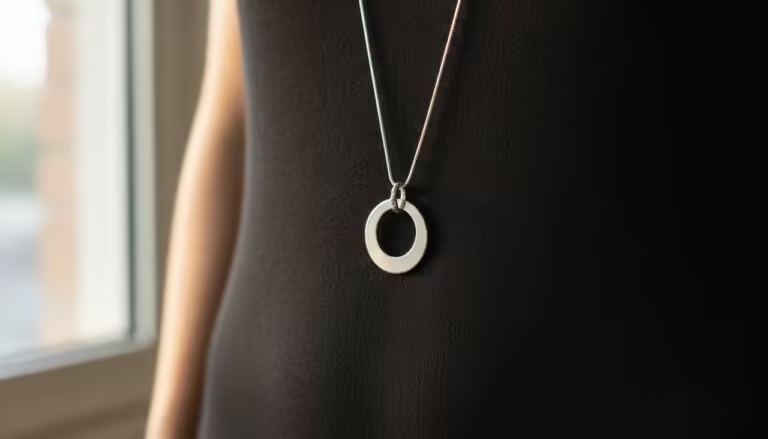
- Fine chains that rest high on the collarbone without dangling.
- Smooth bands with no raised prongs to snag on technical fabrics.
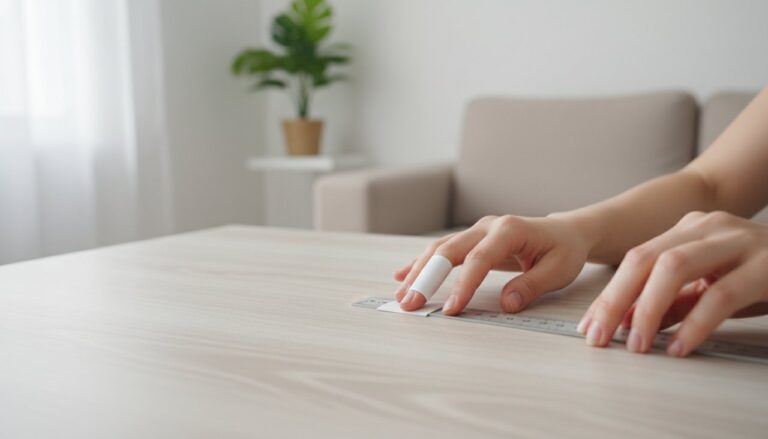
To ensure these pieces truly disappear into your routine, it helps to find ring size measurements that are precise, ensuring the metal doesn’t shift or pinch during movement. The same criteria that make a piece gym-safe also make it office-appropriate. A small titanium stud or a plain solid gold band reads as intentional in a meeting room — the absence of elaborate settings or dangling parts is precisely what makes it look like a considered choice rather than an afterthought. When a piece never comes off, it doesn’t need to perform differently at different points in the day. Plain geometry and clean metal are as legible in a boardroom as they are on a weight rack.

The morning routine is remarkably quiet now. There is no unhooking, no untangling, and no more searching for lost parts on a gym floor. The pieces worn to sleep are the same ones that go to the weight rack and then to the conference room — present in the 6 AM warm-up and still there in the 2 PM meeting, without requiring a single adjustment in between.