
The metal hanger makes a sharp, rhythmic scraping sound against the rod. It is 7:42 AM.
A hand moves through a dense wall of fabric—silk, wool, and synthetic blends—pushing aside a beaded top that hasn’t caught the light in years. On the nightstand, the digital clock flickers to 7:43.
I stand before a mountain of clothes, motionless, as the morning light catches the dust motes in the air. The room is silent except for the distant hum of traffic outside.
Full Closet
Rows of garments hang in tight formation, some still bearing the plastic dry-cleaning sheaths that crinkle at the slightest touch. A patterned skirt with sharp, geometric lines sits next to a blazer with structured shoulders meant for a gallery opening that never happened.
These pieces were acquired for a different life, one filled with rooftop cocktail hours and high-stakes events. In the actual room, however, the light reflects off a simple desk and a laptop waiting to be opened. The closet is a library of unread books, each item representing a choice that requires energy to resolve.
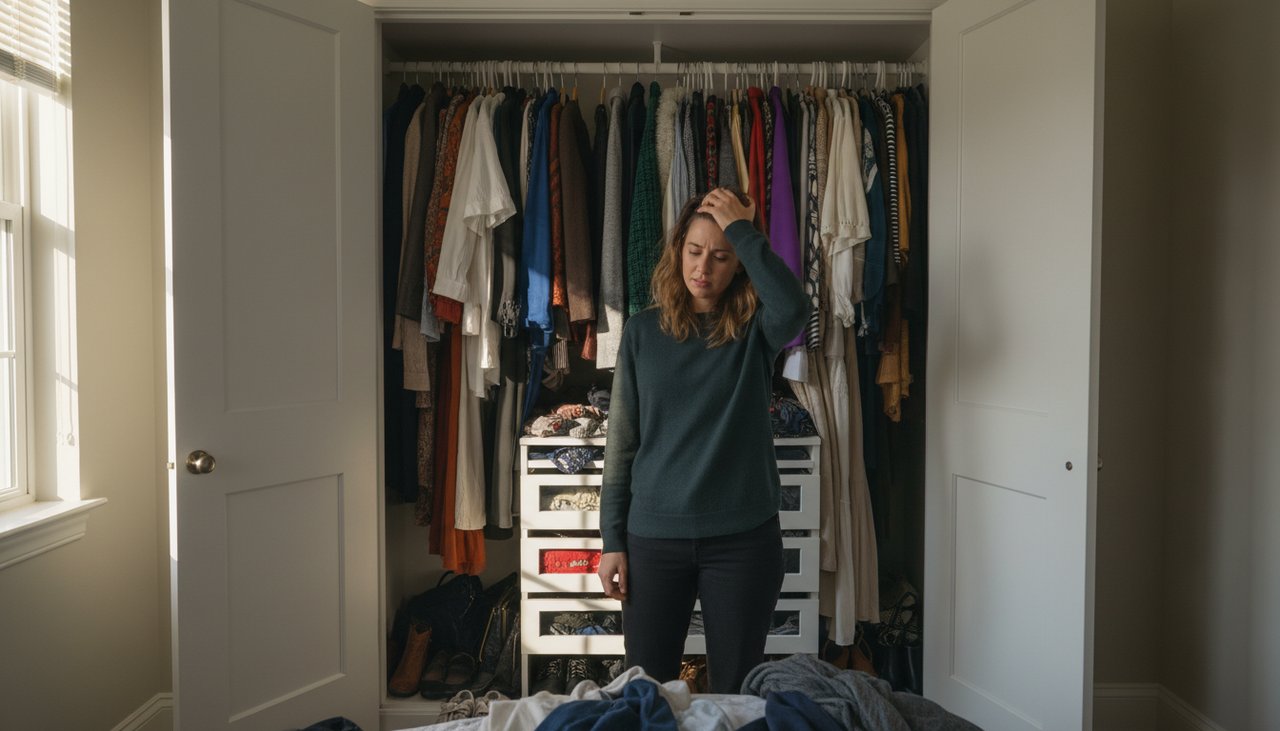
The sheer volume of the collection creates a physical resistance; a sleeve caught in a zipper, a hem dragging on the floor. I realized my wardrobe was less of a collection and more of a burden.
Quitting Deciding
There is a morning where the floor disappears beneath a layer of discarded fabric. Five different outfits lie in heaps—linen trousers, a navy sweater, a wrap dress—resembling the aftermath of a struggle. The air in the room feels heavy with the weight of these rejected options.
Finally, I reach for a pair of plain black trousers and a white button-down. The movement is swift and final. The shirt is tucked in, the buttons fastened from bottom to top. The door clicks shut behind me, leaving the chaos of the bedroom behind.
On the walk to the subway, the decision is made: the closet will no longer be an art project, but an operating system.
Architecture of Calm
The visual landscape of the wardrobe changes. The vibrant oranges and complex florals are gone, replaced by a steady rhythm of navy, grey, black, and white. This became the foundation of my professional capsule wardrobe.
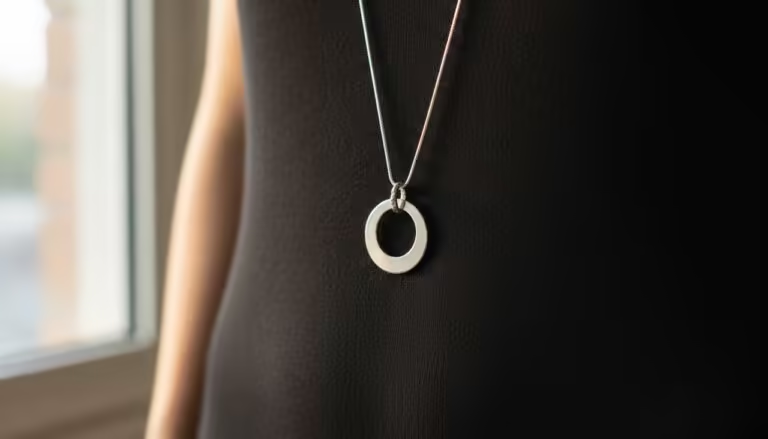
There is a new logic to the arrangement. Any top pulled from its hanger naturally aligns with any pair of trousers. The mental chatter of “does this match?” is replaced by the simple physical act of dressing. To simplify further, selecting jewelry for a black outfit becomes a standard part of the routine rather than a creative challenge.
The materials are selected for their silence. A pair of ponte knit trousers is folded neatly; they have the stretch of athletic wear but the sharp crease of a professional garment. I look for wrinkle-resistant workwear like a tech-wool blazer that hangs ready, a fabric designed to emerge from a bag without a single crease.
To make this system functional, I rely on a simple core formula:
- Three pairs of trousers in neutral tones (black, navy, charcoal)
- Five high-quality cotton or silk shirts in white or light blue
- Two fine-gauge knit sweaters for layering
- One structured blazer that works with every bottom in the rotation
- A single, cohesive color palette to ensure compatibility
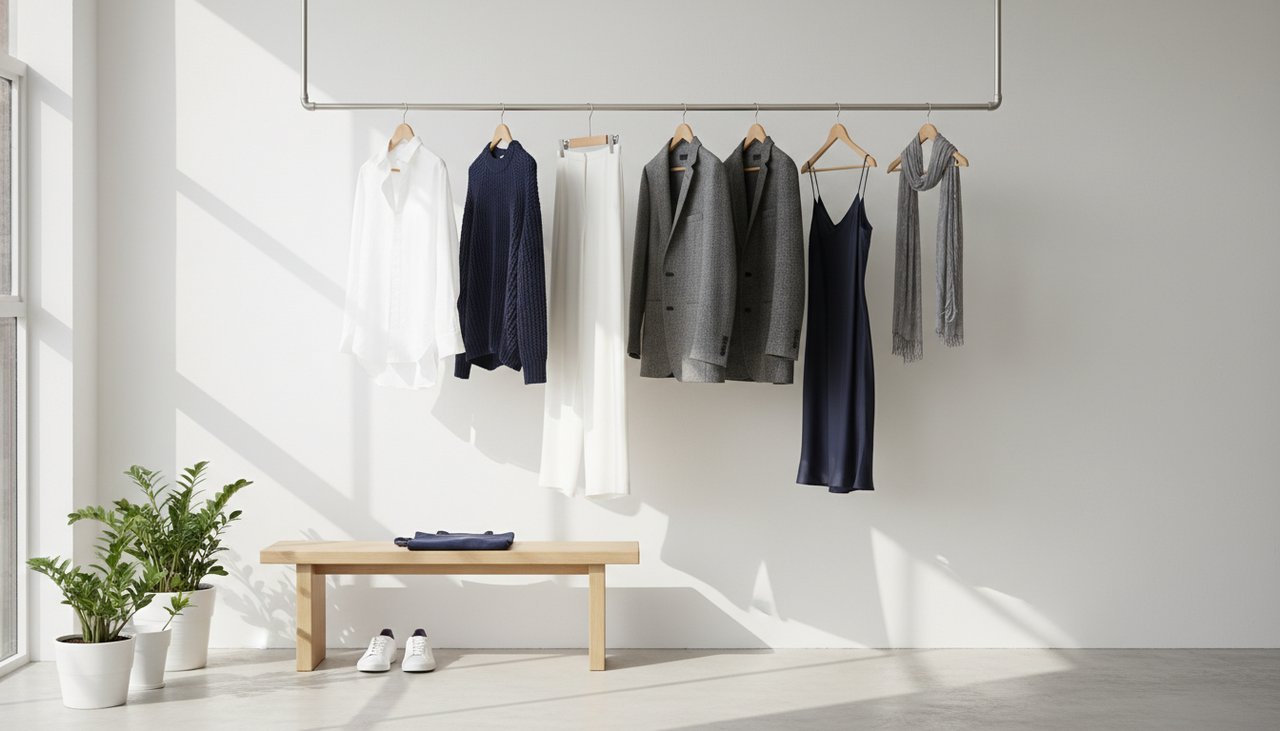
The formula holds across most office environments, but the weight of each item shifts depending on context. In client-facing or formal industries — law, finance, consulting — the five shirts do most of the work and the blazer is rarely optional. In creative or casual offices, one of the three trouser slots can absorb more texture or a quieter print without breaking the system. The underlying logic stays the same: fewer decisions, not fewer clothes.
Fit is the one variable worth adjusting before buying. A straight-leg trouser and a tapered one occupy the same slot in the formula but read differently on different frames. Trying both before committing to three pairs of the same cut avoids the specific frustration of owning five items that are technically correct but never feel right.
No iron is plugged in. No steam rises in the morning air. The clothes behave predictably, requiring nothing but to be worn.
Final Silent Details
On the wooden surface of the dresser, three objects sit in a small ceramic dish. A watch with a weathered leather strap, its buckle showing the slight scuffs of daily use. Two gold hoops, thin and circular, catching a sliver of window light. Because these items are worn daily, it helps to know how to clean jewelry at home to maintain their subtle, natural shine.

A structured black tote bag rests by the door, its handles already curved to the shape of my grip. There is no hovering over a jewelry box, no debating between silver or gold. Occasionally, I might add a few stack bracelets if the day feels right, but the items are generally picked up and put on in a sequence that has become mechanical.
The uniform is complete without a single conscious thought being expended on its assembly.
The greatest comfort isn’t a designer label; it’s a quiet mind.
It is 7:42 AM. I am already dressed, standing in the kitchen with a cup of coffee. Getting ready took exactly four minutes. The bed is made, and the bedroom floor is clear of discarded wool.
There is no panic, no frantic searching for a lost sock, and no fatigue before the day has even begun. The transformation was an act of self-preservation, a way to reclaim the space that decision fatigue had been quietly occupying.
In the silence of the morning, there is only the readiness to begin. If the view into the closet feels crowded tomorrow, consider the effect of removing just one variable. One reliable combination can be the start of a much lighter morning.