

We used to view a metal band as a mere bodyguard for a fragile stone—a sacrificial layer meant to absorb the impacts of daily life. Today, jewelry has evolved into something more personal. A piece you wear every day shouldn’t feel like an external addition; it should feel like a natural extension of yourself.
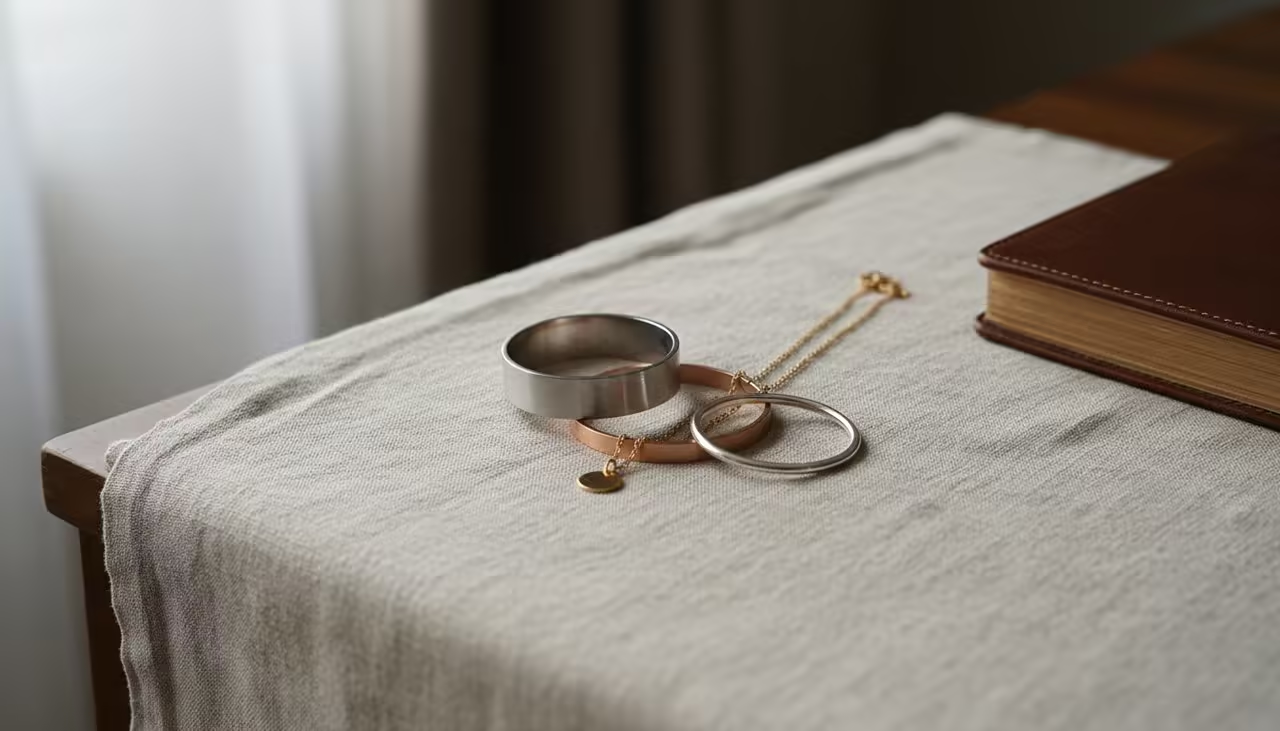
The highest form of everyday jewelry achieves the art of disappearing.
To reach a state where you forget you are wearing jewelry, the design must account for constant movement and skin chemistry. The difference between a temporary accessory and a permanent fixture lies in subtle engineering choices. It is the invisible structure that determines if a piece truly belongs on your body.
Ring That Leaves No Mark
Imagine sliding off a ring after a long day of work and finding the skin underneath perfectly smooth. There are no red indentations or deep marks encircling your finger. This comfort is the direct result of a specific interior profile.
Most standard bands have flat inner surfaces that trap moisture and press uniformly against the skin. High-quality daily wear incorporates a subtle interior curve, often referred to as a comfort fit. This gentle doming reduces the actual contact area with your skin by about a third.
By elevating the edges, the design allows air to circulate naturally. It also provides a vital buffer zone when your hands inevitably swell from heat or exercise. To ensure this mechanism works perfectly, you should always take the time to find ring size accurately, allowing the metal to glide over the knuckle rather than constricting it.
When you are looking for a band to wear indefinitely, pay close attention to the interior cross-section:
- Look for a visibly rounded inner wall rather than a flat one.
- Verify that the piece is designated as a comfort fit design.
- Prioritize this structural detail for any band wider than three millimeters.
Chain That Sleeps Untangled
You wake up to find your necklace lying perfectly flat against your collarbone, exactly where it settled the night before. There are no sharp kinks, twisted knots, or pulled hairs caught in the links. This fluidity depends entirely on the architecture of the chain.
Box chains are exceptionally reliable because their square links interlock to form a smooth, flexible column. This structure allows the metal to bend naturally with your body without compromising its strength. It moves with you, rather than against you.
Other popular styles often fail under the pressure of sleep. Snake chains, for example, consist of tightly joined plates that can permanently crease if bent past their threshold. Once these plates are damaged, the chain cannot be repaired to its original state.
For a necklace intended for 24/7 wear, mechanical stability is your priority. We recommend chains constructed from solid wire rather than hollow tubes. An interlocking square design offers the best balance of a minimalist profile and necessary durability.
Finish That Endures Daily Life
Whether you are washing dishes in hot water or finishing a heavy workout, your jewelry should keep its luster. It should never dull, discolor, or leave marks on your skin. Resilience against the environment requires chemical stability in the metal itself.
Materials like solid gold do not react with the amino acids in sweat or the surfactants found in household soaps. The alloy remains inert, preventing the surface oxidation that ruins cheaper metals and avoids the common issue of rings green finger reactions. Even with high-quality materials, knowing how to clean jewelry at home can help maintain that original daily glow.
Jewelry made with a base metal core and a thin external layer will eventually break down. Constant friction and exposure to liquids physically strip away the plating. This process exposes the reactive metals underneath, which often leads to skin irritation.
Material selection is a functional decision for uninterrupted wear. We suggest avoiding plated components for any items in constant contact with your skin. If you have metal sensitivities, be cautious with industrial stainless steel, as it often contains trace amounts of nickel.
Connections That Hold Secure
A heavy coat pulled over your shoulders might snag your chain, but a well-made piece won’t snap. The real strength of a delicate necklace resides in its smallest connection points. A lobster clasp is generally superior because its internal mechanism is thick enough to resist sudden tension.
Traditional spring rings rely on a microscopic internal coil that can lose tension or degrade over time. Whether you wear a single piece or prefer to stack bracelets, the integrity of the jump rings—the tiny loops connecting the chain to the closure—is paramount. If these loops are only pinched shut, a sudden tug will pull them open.
When you inspect the hardware of a necklace or bracelet, look for a closure that springs back firmly. Most importantly, ensure that the tiny connecting loops have a fully welded seam where the wire meets. This ensures the loop is a solid circle that cannot be pulled apart.
Choosing a piece to live on your body permanently requires looking past initial aesthetics. It demands an appreciation for functional engineering that serves your daily routine. The best pieces don’t demand your attention; they simply adapt to your life so completely that you only notice them when they are gone.