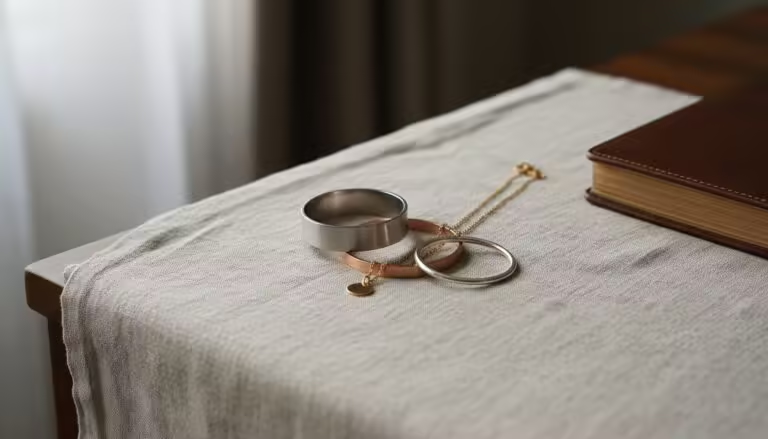

Most people have a jewelry box full of possessions, but only a small tray on the nightstand for the pieces they actually live in. There is a vast gap between a piece that looks pristine under glass and one that survives a Tuesday morning commute. I think of these daily items as "everyday armor." They are the pieces we put on before our first coffee and only take off right before bed. To keep these staples looking their best, knowing how to clean jewelry at home ensures they remain a seamless part of your routine.
The biggest barrier to wearing jewelry every single day is the anxiety of that first scratch. We are naturally conditioned to want things to stay in their original, untouched condition. However, I realized early on that perfection is the enemy of everyday wear. If you are constantly worrying about scuffing a ring on a steering wheel, you aren’t really wearing it; you are just babysitting it.
The goal isn’t to preserve an unrealistic ideal. It is to choose materials and shapes that adapt to a life being lived. Here are a few honest truths I learned from living with matte steel bands and flat link chains day in and day out.
The Unavoidable Polish of Daily Life
When I first bought a brushed steel band, I expected its muted texture to stay exactly like that forever. It didn’t. After a few months of daily wear, I noticed a subtle change happening on the bottom edge of the ring.
Since I spend hours typing on a laptop, the constant friction between the metal and the edge of my keyboard was altering the surface. Instead of looking damaged, the finish was slowly developing a smooth, low-contrast sheen right where it made contact. The ring was essentially mapping out the exact way my hand rests on a desk.
A matte finish is a starting point, not a permanent state.

Once I accepted this, the anxiety of scratching it disappeared. The ring was no longer just a static object off an assembly line. It was becoming customized by my own habits and movements.
A Flat Chain Must Earn Its Place
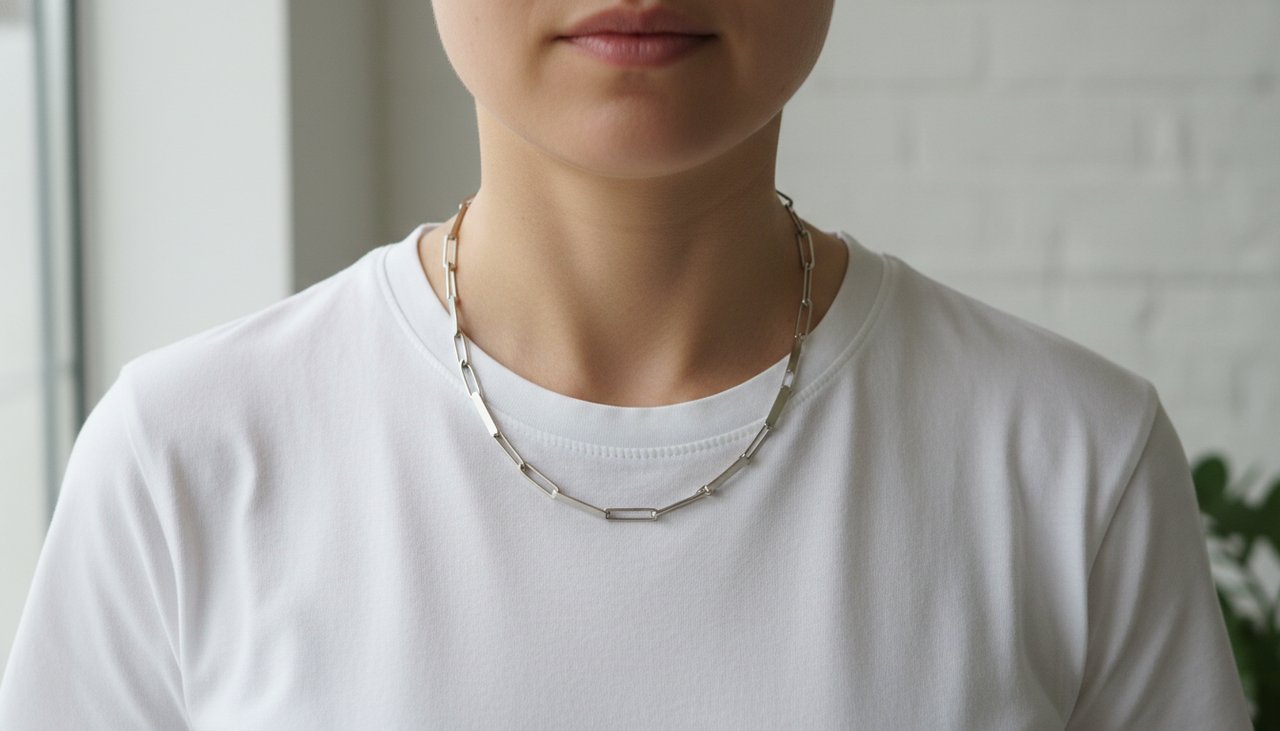
I used to assume any chain with flattened links would naturally sit flush against my collarbone. My first few attempts proved me wrong. Halfway through the morning, the chain would flip over, catch on my collar, and stubbornly refuse to lay down again.
The problem was treating all chains as if they behaved the same way regardless of their weight. A chain that looks flat in a photograph might lack the actual mass required to obey gravity. While a hollow link chain might seem appealing because it is lightweight, the slightest movement of a shirt collar will twist it out of place.
A solid chain carries enough weight to pull itself back into a resting position. The physics of daily wear demand substance over mere appearance. When choosing a chain meant to sit flush, checking a few physical traits will save you from constant adjusting:
- Hold it by one end to see if it hangs straight without twisting.
- Check for solid links that provide enough mass to anchor the chain.
- Look for tightly spaced connections that limit unnecessary rotation.
Comfort Is Measured in Millimeters
A wide steel band looks substantial on the hand, giving off a feeling of permanence. But visually heavy rings often come with a hidden physical cost. I learned this after wearing a flat-profile ring that dug sharply into my knuckle every time I gripped a coffee mug or carried groceries.
By the end of the day, I would take it off just to relieve the pressure. The issue wasn’t the width itself, but the internal geometry. A ring with a perfectly flat interior creates sharp pressure points against the skin when your fingers flex. Because comfort varies so much by shape, it is always helpful to find ring size accurately and look for designs that accommodate movement.
The solution lies in a curved interior profile. This subtle rounding removes the hard edges, allowing the metal to slide over the knuckle smoothly. It reduces the surface area pressing directly against your finger, making the ring feel like it is disappearing into your hand.
If you are looking at any band wider than five millimeters, always run your thumb along the inside edge. If it feels completely flat, it will likely cause fatigue by the afternoon.
The Quiet Light of Matte Surfaces
There is a loud, demanding quality to highly polished jewelry. It catches every stray beam of light and throws it back at the room. That flash is great for evening events, but it can feel overly complicated when you are just riding the subway or sitting in a morning meeting. While you might stack bracelets for a more layered look, keeping the finishes muted maintains that essential balance.
Matte steel handles light completely differently. Instead of specular highlights that create sharp reflections, it relies on diffuse reflection. The light hits the textured surface and scatters softly in all directions, creating a muted glow.
I noticed the contrast clearly under the harsh fluorescent lights of an office. While polished watches shot distracting glints across the wall, my brushed steel band just held a soft, ambient light. It didn’t shout for attention.
Polished pieces reflect the world. Matte pieces absorb it.
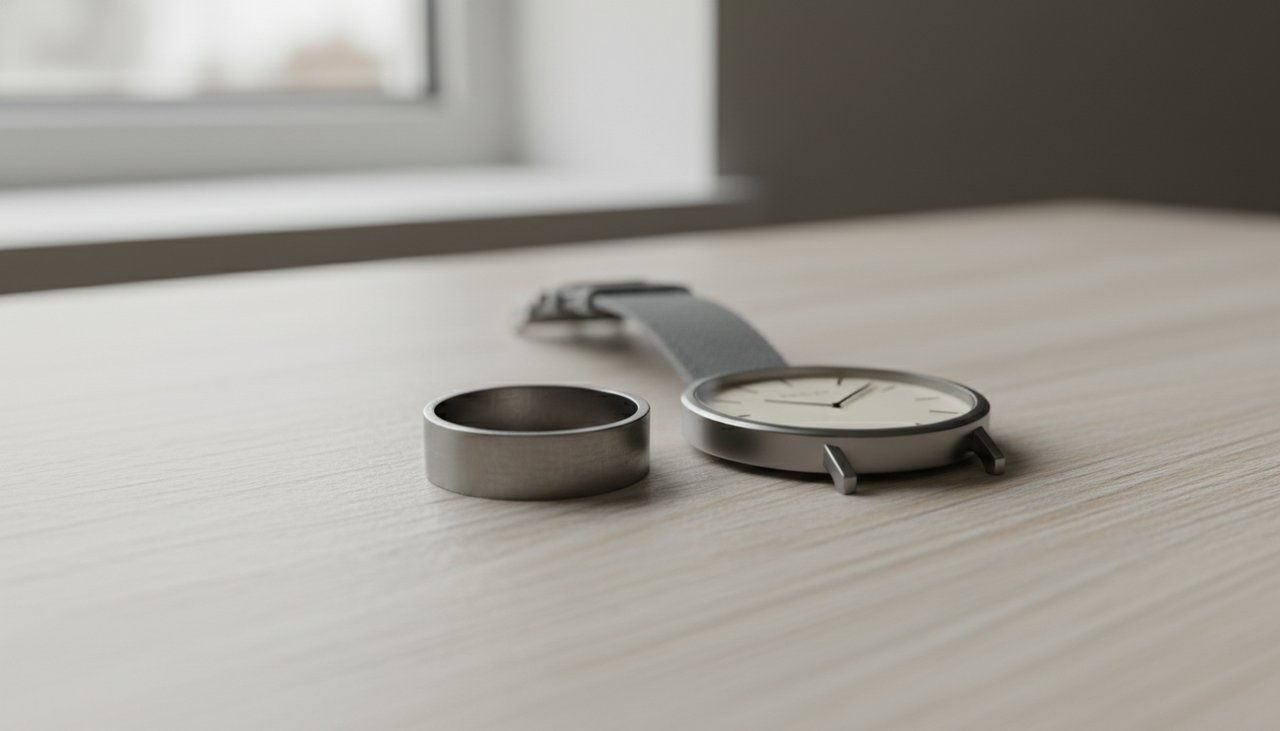
This muted interaction with light makes matte pieces feel unpretentious and approachable. They blend into a casual wardrobe effortlessly—perfect for a jewelry black outfit—because they never compete with what you are doing. They are designed to complement your life, not dominate it.
Living in your jewelry changes how you view it. Choosing practical items like matte steel bands and flat chains is an acknowledgment of reality. They are built with the understanding that friction happens, gravity matters, and comfort is mandatory.
These pieces do not degrade with use; they simply settle in and get better alongside you. The next time you look at your daily jewelry, don’t look for flaws. Look for the stories that are starting to emerge.